The practical guide
Triana flamenco: getting there and around
How to reach Baraka Sala Flamenca in Triana, what to see on the way, where to eat around the show and how to plan the evening.
Reserve a flamenco night ↗Quick answer
Baraka Sala Flamenca is at Calle Pureza 107, the main street through Triana's old quarter on the west bank of the Guadalquivir. Cross the Puente de Isabel II from the centre, arrive at the Altozano square and find Calle Pureza south of it. Leave time for Calle Betis on the riverside, and plan dinner around your session.
Where Baraka is
Baraka Sala Flamenca is at Calle Pureza 107, in Triana. The barrio occupies a tongue of land on the west bank of the Guadalquivir, between two arms of the river, and its people, the trianeros, consider it different in character from the rest of Seville. Wikipedia describes Calle Pureza as the main street crossing the historical quarter, south of the Altozano square, and the street carries the Church of Santa Ana. That makes the address easy to hold in your head: cross the river, reach the square, then follow the main street into the old quarter. If you are unsure at any corner, the street numbers on Calle Pureza and your confirmation are all you need.
Read next: Baraka Sala Flamenca tickets: what you get
Crossing the Triana Bridge
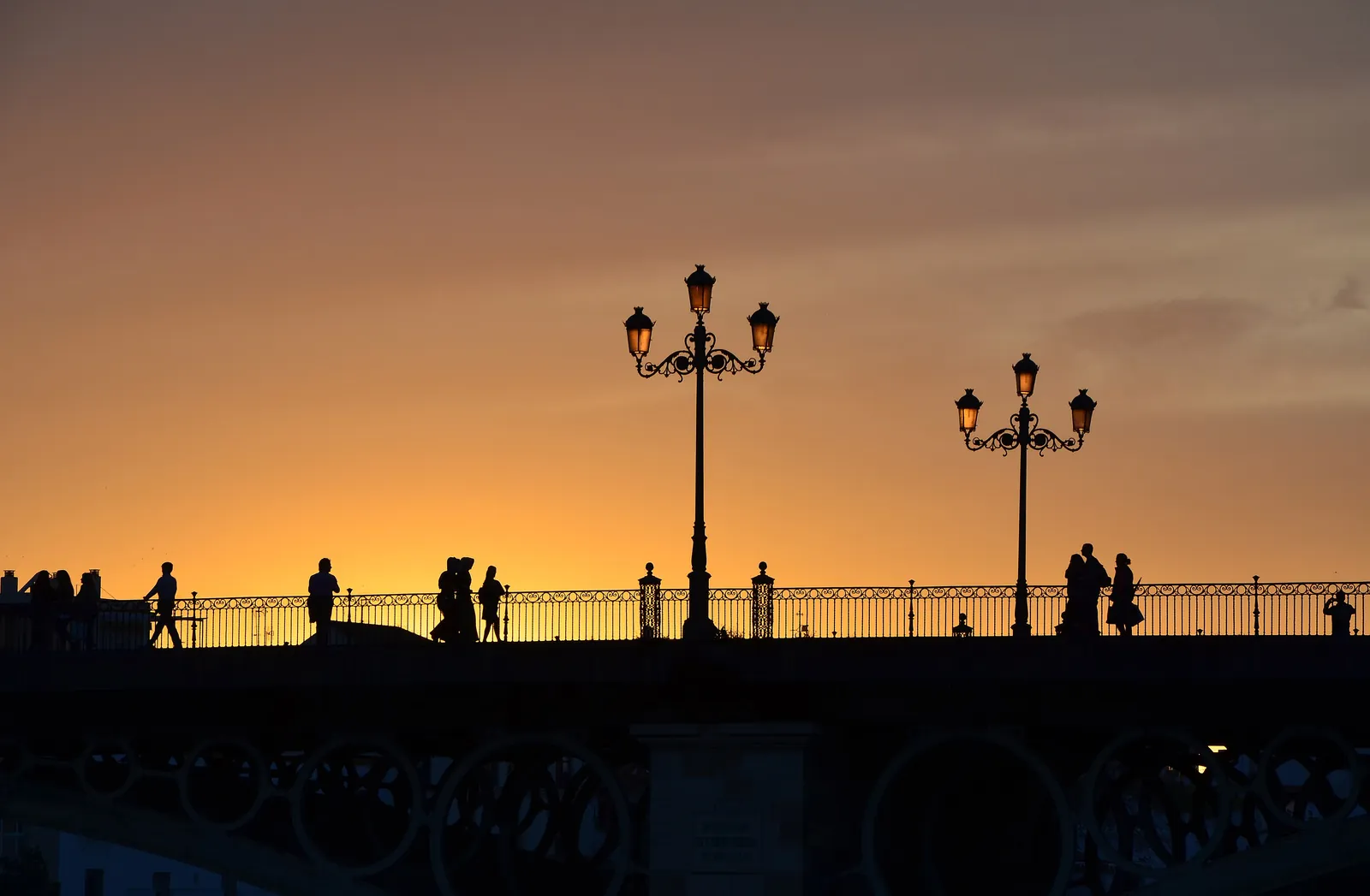
Visit Sevilla gives the bridge's formal name as the Isabel II Bridge, after the queen in whose reign it was completed in 1852, and says locals and visitors both call it the Puente de Triana. The iron structure was inspired by the Pont du Carrousel in Paris. From the middle of the bridge you see the Giralda and the Torre del Oro on one side and Triana on the other, and the tourism office describes it as a starting point for the barrio's best-known spots. It was declared a National Historical Monument in 1976, and after the restoration of 1976 and 1977 its iron arches no longer carry the deck, so they now stand as heritage and ornament.
The Altozano square
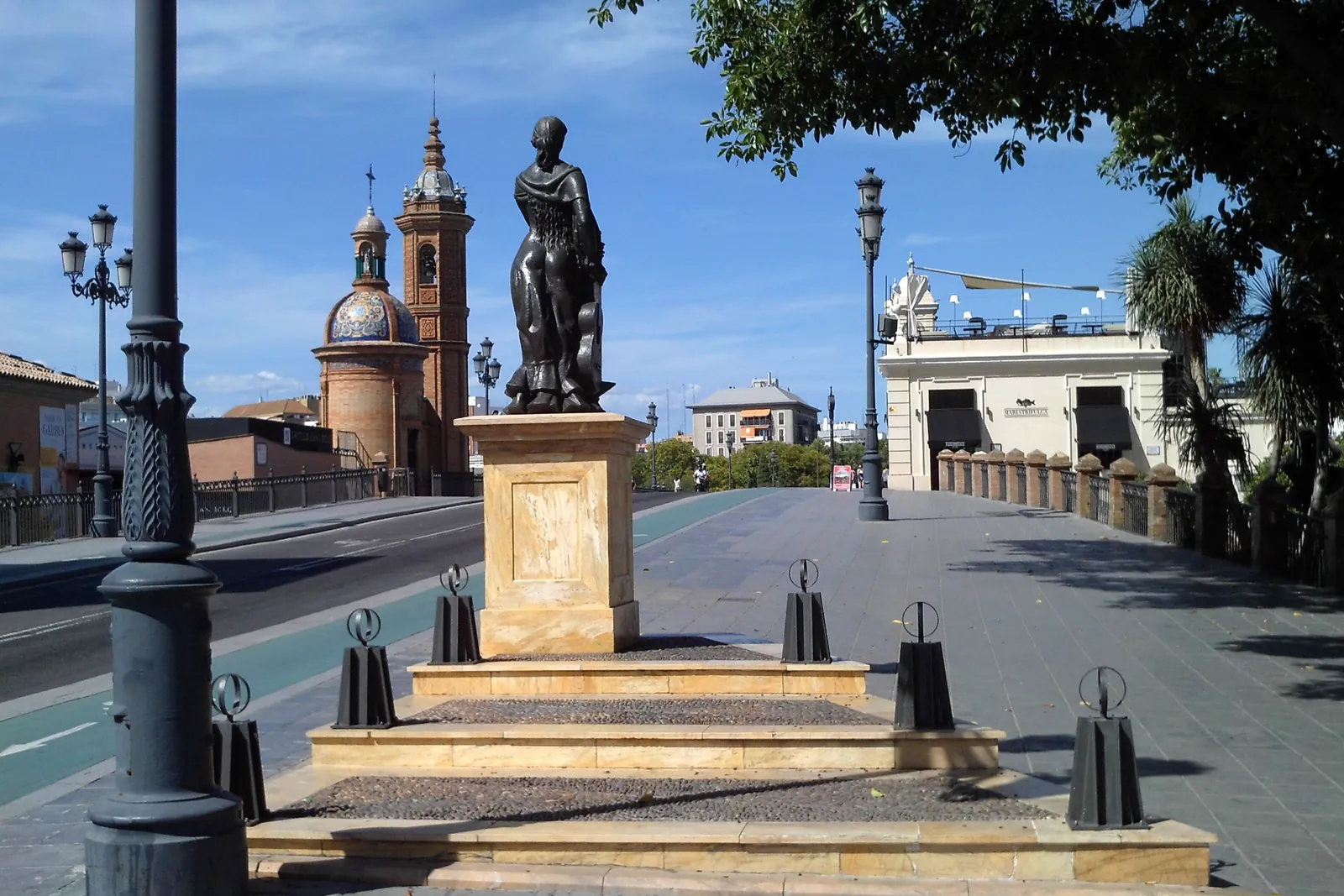
The bridge lands in the Altozano square, which Wikipedia calls the traditional gateway to Triana from the bridge. Two monuments stand there, one to the bullfighter Juan Belmonte and one to the flamenco arts. Visit Sevilla notes that the statue honours the three sides of the flamenco world, which makes the square a fitting first stop before an evening of cante, toque and baile. The Capilla del Carmen, a small chapel, stands at the end of the bridge. San Jacinto street, the pedestrian shopping street, starts here too.
Calle Pureza and Santa Ana
Calle Pureza leads you through the old quarter. Santa Ana, the church people call the Cathedral of Triana, was founded in 1276 by Alfonso X, according to Visit Sevilla, and was the first Christian church built in Seville after the Reconquest. It is an active church, so respect services and keep quiet inside. Wikipedia also places the Capilla de los Marineros, the seat of the Esperanza de Triana brotherhood, on this street. Baraka is a working venue in the same old quarter, and the street's mix of churches and brotherhood chapels is part of the barrio's character.
Calle Betis before the show
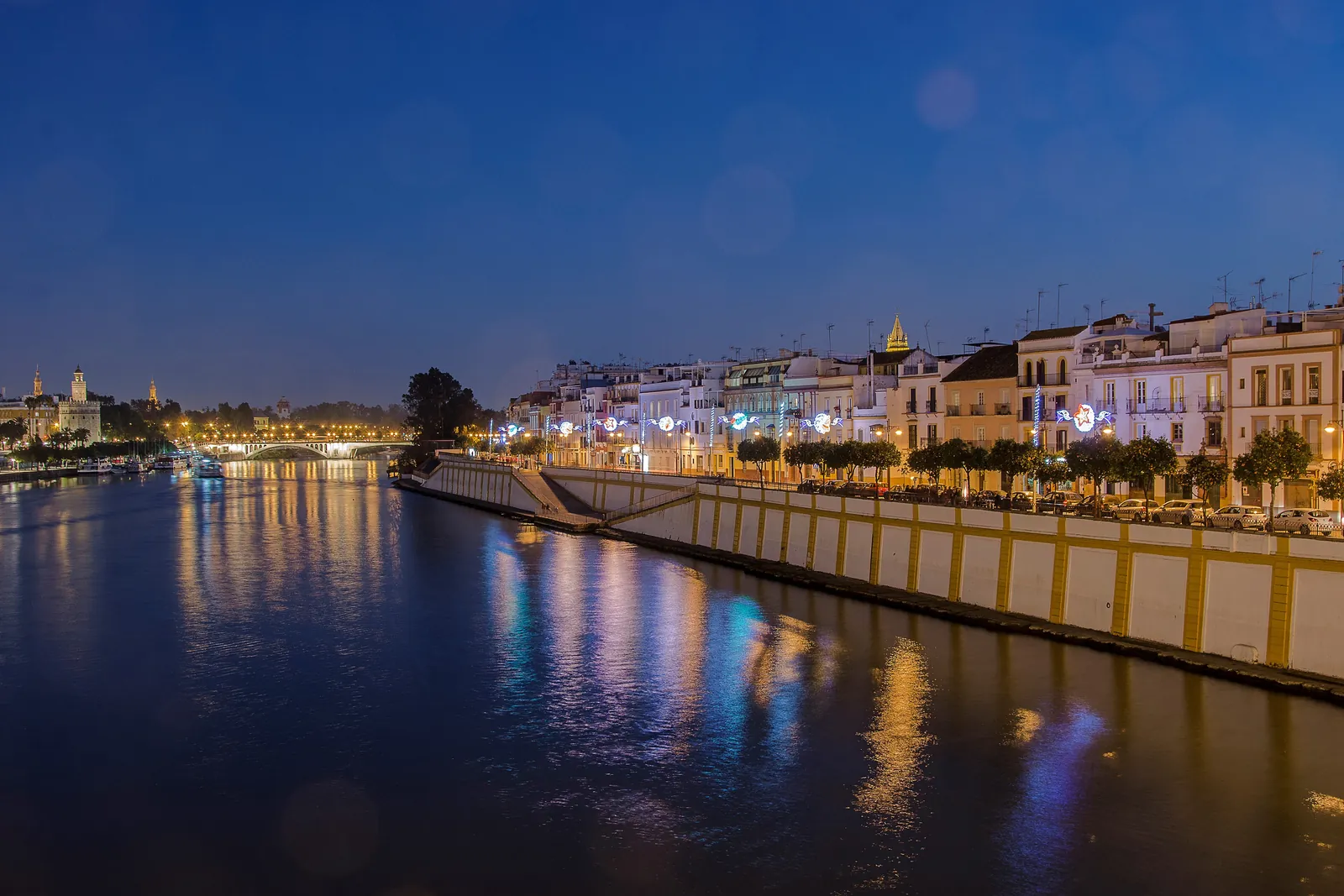
Calle Betis runs along the river, and Visit Sevilla describes it as one of Seville's most picturesque streets, with colourful houses, riverside terraces and views of the Torre del Oro, the Giralda and the Cathedral. The name comes from the Latin name of the Guadalquivir. The tourism office advises visiting at sunset for the best views and says it is quieter on weekdays and crowded at weekends in high season. The street is public space and open around the clock, so a stroll before or after your session costs nothing, and the views of the centre make it a good place to wait for your start time.
Eating around the show
Food is not included in the ticket, so decide where you will eat before you book. Calle Betis is lined with bars and restaurants, and the Triana Market, close to the bridge on the site of the old San Jorge Castle, has stalls, tapas bars and cafés. Visit Sevilla suggests visiting the market on a weekday morning, which makes it a better lunch than a pre-show dinner. Sessions change with the season, so choose your night first, then book a table for before or after, and leave a margin for the walk to Calle Pureza. If you eat first, finish with time in hand rather than arriving as the artists begin.
The market and the castle's remains
The Triana Market stands in the Altozano square, on the remains of the San Jorge Castle, a medieval fortress that was the seat of the Inquisition from 1481, according to Visit Sevilla. Remains of the castle and an Almohad cemetery were found during the renovation and now form a museum space inside the market. Beside the stalls for fruit, fish, meat and bread, the market holds a cooking school, a flamenco school, tapas bars and cafés. It is a short stop that adds history to the evening and sits very close to the bridge.
Ceramics and the craft of the barrio
Triana is known for pottery. The Triana Ceramics Centre stands on the remains of the former Santa Ana factory and preserves original kilns, moulds and tools, and Visit Sevilla notes that many of the tiles on the Plaza de España were made in the barrio's historic ceramic factories. It is a daytime visit, fully indoors, so it pairs well with an evening show: tiles and tools in the afternoon, flamenco after dark. Opening hours change, so check the centre's own website on the day. Pottery and flamenco are the two traditions the tourism office keeps returning to when it describes the barrio.
Festival weeks and busy nights
Triana has its own festivals. Wikipedia describes the Velá de Santa Ana, held on Calle Betis around the saint's day in late July, as the city's second most important festival after the April Fair, and notes that Holy Week processions in Triana have a distinct character. Visit Sevilla adds that the Bienal de Flamenco is held in the city every two years, in even years. At such times the streets fill and tables are harder to find, so book your session and dinner earlier than usual and give yourself extra time to cross the bridge.
A flexible evening
The order below suits most days because it never depends on a fixed clock time. Your confirmation shows the start time for your night, and the booking calendar shows which sessions are open, so choose the session first and let the rest of the day flex around it. If you add the Ceramics Centre or the market, check each place's own hours, because they change.
- Daytime: the Ceramics Centre or the market
- Late afternoon: a walk along Calle Betis
- Your session at Calle Pureza 107
- Dinner in the old quarter or back on the river
Who this isn't for
Skip a Triana evening if you want a single stop with transport included, because the ticket does not cover hotel pickup. If walking over a bridge and through older streets after dark is difficult for you, plan a taxi or ride to the door. And if you are looking for a long daytime tour of corral courtyards and workshops, this guide is about an evening around one show, not a full day in the barrio.
Frequently asked questions
Where is Baraka Sala Flamenca?
At Calle Pureza 107, in Triana, on the west bank of the Guadalquivir. Calle Pureza is the main street through the old quarter.
How do I reach Triana from the centre?
Cross the Puente de Isabel II, known as the Triana Bridge. It lands in the Altozano square, the traditional gateway to the barrio.
What else is on Calle Pureza?
The Church of Santa Ana, called the Cathedral of Triana, and the Capilla de los Marineros, seat of the Esperanza de Triana brotherhood.
Where can I eat near the venue?
Calle Betis has bars, restaurants and terraces, and the Triana Market has stalls, tapas bars and cafés. Food is not included in the ticket.
When is Triana at its busiest?
During Holy Week, the Velá de Santa Ana in late July and the weekends of high season. Book dinner earlier at those times.
What can I do in Triana by day?
Visit the Ceramics Centre, the market and Santa Ana, or walk Calle Betis. Check each site's own hours before you go.
Sources