The barrio around the room
Triana: the barrio of flamenco and tiles
The history of Triana, the barrio across the Guadalquivir where potters, sailors and flamenco artists lived, and what survives of it today.
Reserve a flamenco night ↗Quick answer
Triana is the barrio on the west bank of the Guadalquivir in Seville, settled since Roman times and long a suburb outside the city walls. Its residents were traditionally sailors, potters, artisans, bullfighters and flamenco singers and dancers. Today its ceramics heritage, its riverside street Calle Betis and its flamenco venues are what visitors come for.
A barrio across the river
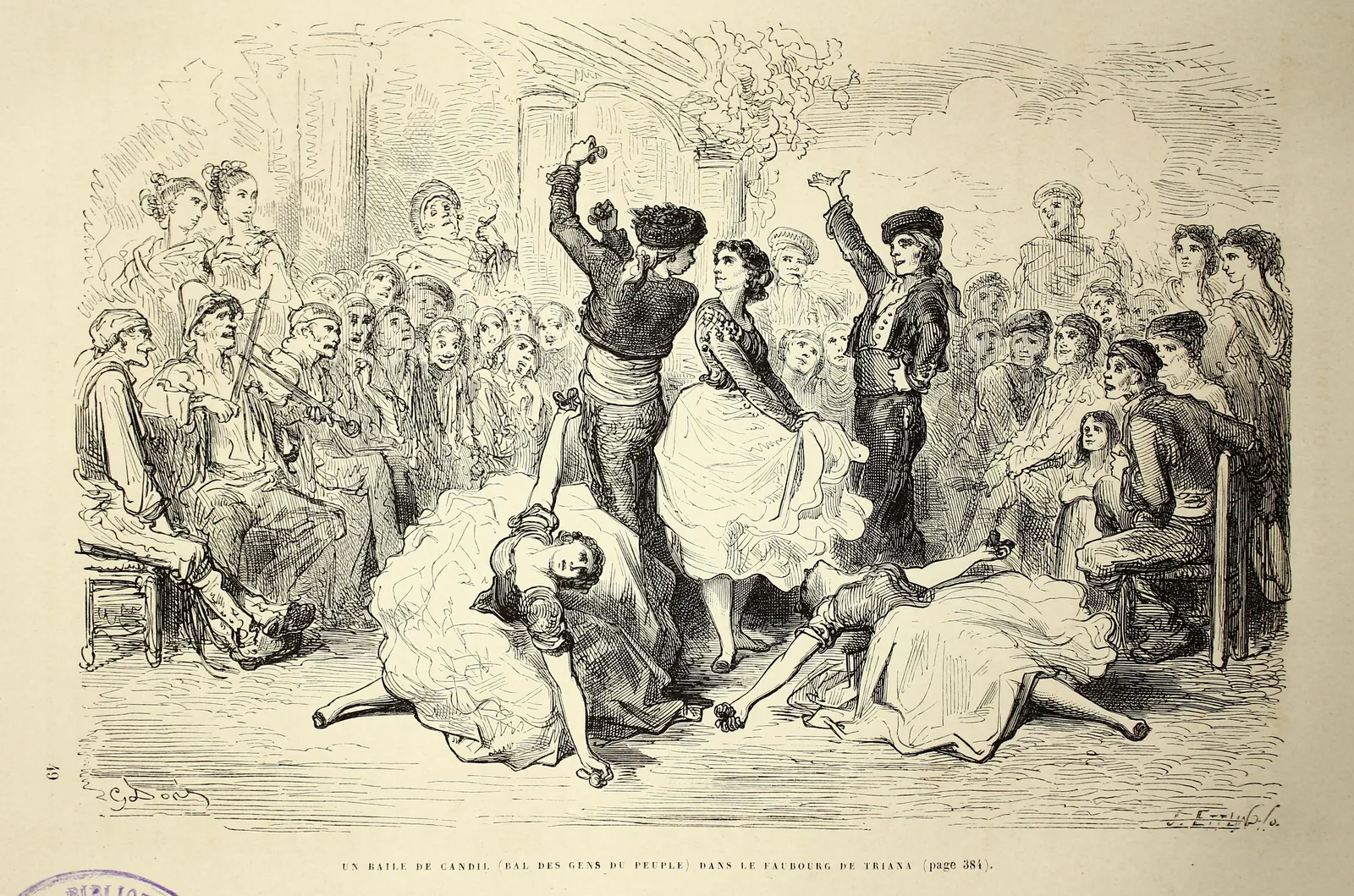
Triana lies on the Guadalquivir's west bank, on a tongue of land between two arms of the river, and was long an arrabal, a suburb outside the city walls. Wikipedia says its first settlements date from the Roman period. Its people, the trianeros, identify strongly with it and consider it different in character from the rest of Seville. Visit Sevilla describes it as the birthplace of potters, bullfighters, sailors and flamenco artists.
The bridge and the castle
Triana's position made it important. Wikipedia notes that it was the last defence of Seville from the west and sat between the city and both the coast and the Aljarafe farmland. A boat bridge joined it to the city for centuries, and the castle on the Triana bank, later the Castle of San Jorge, was for a time the seat of the Spanish Inquisition. The Triana Market now stands on the castle's site, and the iron Puente de Isabel II replaced the boat bridge in the 19th century.
Potters and tiles
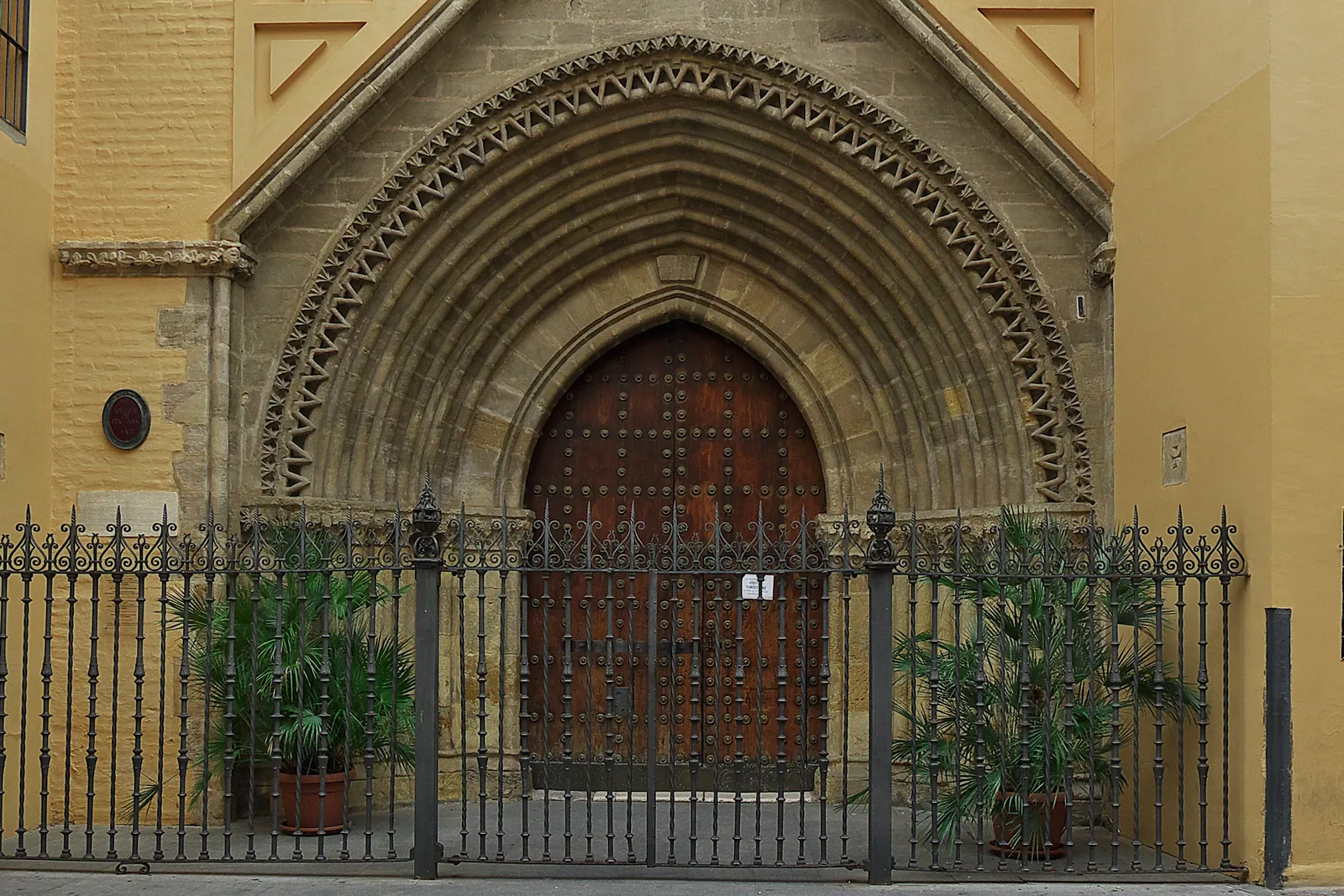
Pottery is the barrio's other claim to fame. Visit Sevilla says the Triana Ceramics Centre sits on the remains of the former Santa Ana factory, one of the last active workshops of the 20th century, and notes that many tiles on the Plaza de España were made in Triana's historic factories. Triana ceramics were exported for centuries to Latin America and other Spanish cities. The Ceramics Centre keeps the original kilns, moulds and tools, and workshops in the barrio still make tiles by traditional methods.
The corrales and the Romani community
Wikipedia says Triana traditionally held a large Romani population, who usually lived in corrales, communal homes built around a patio with a central fountain. Many lived in a street since renamed Pagés del Corro, formerly the Cava de los Gitanos, but they were displaced during redevelopment in the 1970s, and most corrales disappeared in the later 20th century. A few remain and are protected as heritage. The old image of Triana as a haven for gypsies, the article adds, is no longer accurate.
Flamenco in Triana
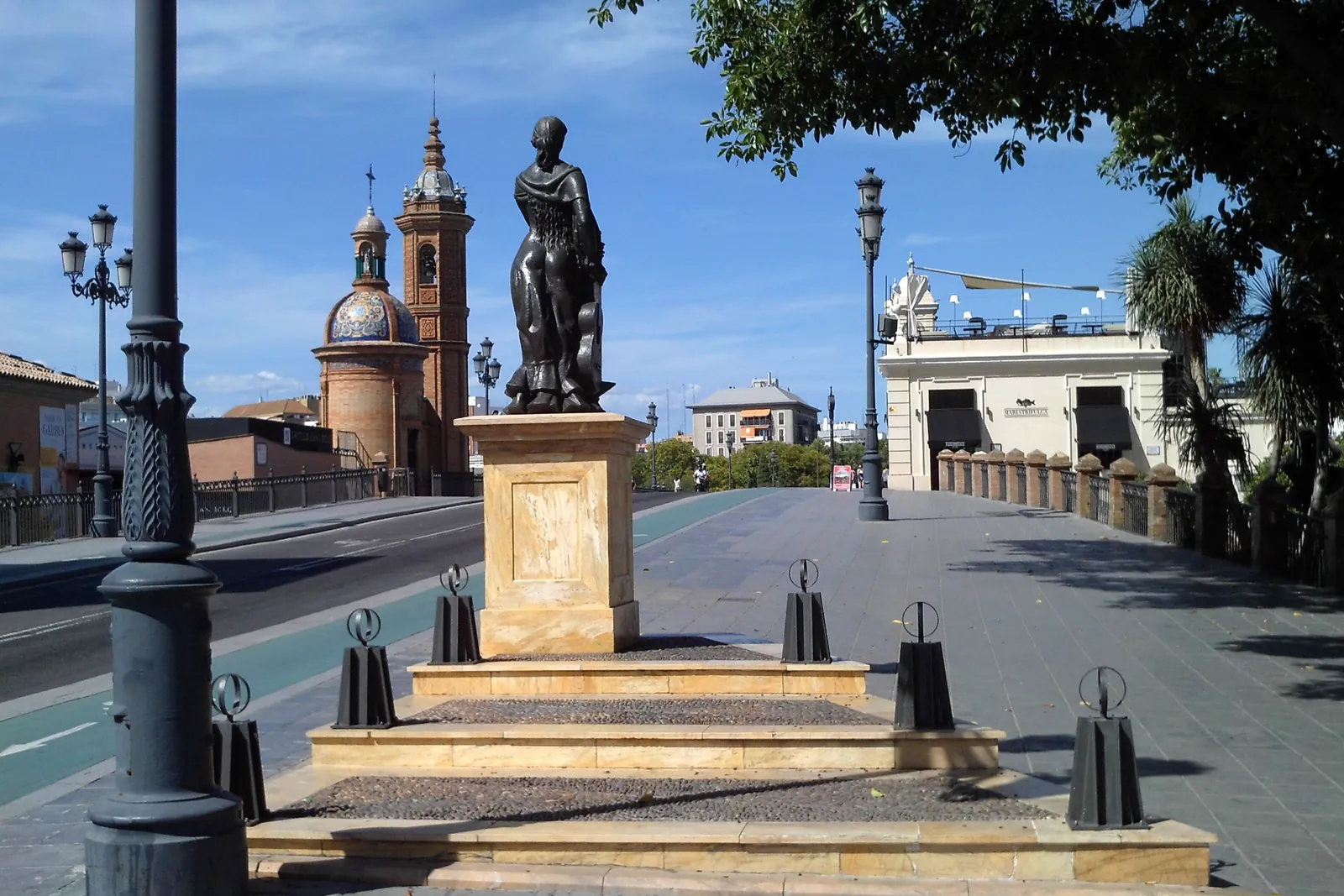
Wikipedia says Triana has a vibrant flamenco culture, and Visit Sevilla calls it a key place to enjoy flamenco in peñas and tablaos with live performances. A monument to the flamenco arts stands in the Altozano square at the foot of the bridge, and the tourism office says it honours the three sides of the flamenco world. Baraka Sala Flamenca is one of the tablao rooms in the barrio, on Calle Pureza, a street that also holds the church of Santa Ana.
Holy Week and the Velá
Triana's festivals reflect its separate identity. Wikipedia says that its Holy Week processions have a distinct character, with the Esperanza de Triana and the Cachorro among the best known. The Velá de Santa Ana, around the saint's day in late July, is held on Calle Betis, with sherry, sevillanas and roasted sardines, and Wikipedia calls it the city's second most important festival after the April Fair. Visit during either and the barrio is busier and louder than usual, which is part of its appeal.
Calle Betis and the river
Calle Betis, named after the Latin name of the Guadalquivir, was once a port area with docks and warehouses linked to river trade. Visit Sevilla says it has lost its industrial character but still keeps its connection to the river, with bars, terraces and views of the centre. Old anchors and parts of traditional boats are still preserved along the riverside stretch, a reminder that Triana's sailors made their living from the water.
Triana today
The barrio is now an easy walk from the centre across the bridge, and the tourism office recommends it for ceramics, for the lively bars and terraces of Calle Betis, and for flamenco in peñas and tablaos. For a visitor, that means a day can begin at the Ceramics Centre and end with an evening show. The history above is not a museum piece: it is the street plan, the church bells and the river light you will walk through on the way to the door.
Frequently asked questions
What is Triana known for?
Pottery and tiles, Holy Week processions, the riverside Calle Betis and its flamenco tradition, according to Seville's tourism office.
Why is it called a barrio apart?
It lies across the Guadalquivir, was historically a suburb, and its trianeros identify strongly with it and consider it different from the rest of Seville.
Is there a flamenco monument in Triana?
Yes. A statue in the Altozano square honours the three sides of the flamenco world, and a second monument there is for the bullfighter Juan Belmonte.
Sources